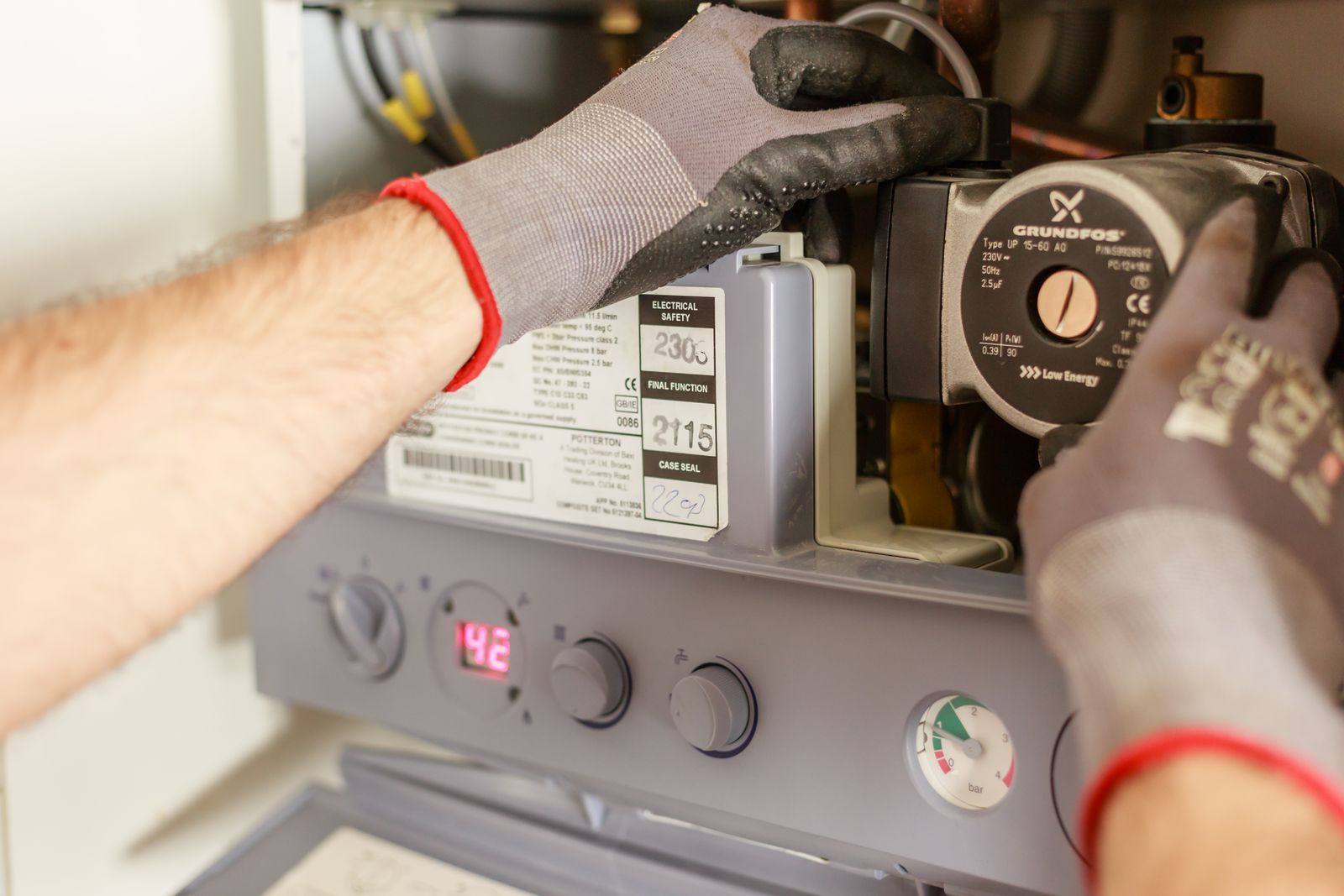
Tankless water heaters in Atlanta
A tankless water heater heats water only when a tap opens — no storage tank, no keeping 40 or 50 gallons hot all day. In Atlanta that appeals to households that want endless hot water, more space, and lower standby losses. It also brings its own maintenance: a tankless unit has a heat exchanger with narrow passages, and in Fulton County the minerals in the water will scale those passages unless the unit is descaled regularly.
Atlanta's water is softer than in much of the country, so scale builds up more slowly here than in the desert Southwest — but sediment and anode-rod wear still happen, and a humid basement or garage can corrode fittings over time. The occasional winter freeze is the sharpest local risk: pipes along exterior walls in homes that rarely see freezing weather are the ones that burst when a cold snap arrives.
Tankless installation, repair, and descaling in Atlanta are handled through the same request process as tank heaters. Requests are shared with independent local providers who serve Fulton County.
When tankless makes sense
- - Large households or high demand — back-to-back showers, laundry, and a dishwasher running at once. A correctly sized tankless unit does not run out of hot water the way a tank does.
- - Limited space — a wall-mounted unit frees the floor space a tank would occupy, which matters in smaller homes and condos.
- - Long-term ownership — tankless units often last longer than tank heaters, but only with regular descaling. The maintenance is not optional.
When it does not
- - Low demand or a small household — a well-maintained tank heater is simpler and cheaper, and the savings from tankless may never pay back the higher installation cost.
- - Hard water with no maintenance plan — a tankless unit in a hard-water home that is never descaled will lose efficiency, deliver fluctuating temperatures, and eventually throw error codes.
- - Undersized gas or venting — tankless units need a larger gas supply and specific venting. A home whose gas line or vent cannot support the unit needs that work done first, which adds cost.
What a tankless visit involves
For a new installation, the provider checks the gas supply, venting route, water quality, and the household's peak demand, then sizes the unit. For repair, the common faults are error codes, ignition failures, scale build-up, and flow-sensor problems. For maintenance, descaling once a year is the standard recommendation, and any new installation should include isolation valves so descaling is straightforward.
Frequently Asked Questions
Does a tankless heater need descaling in Atlanta?
Yes. Mineral scale builds up in the heat exchanger wherever the water carries dissolved minerals, and Fulton County water does. Annual descaling is the standard recommendation.
How much does a tankless installation cost?
It varies widely with the unit, venting, and gas-line work. Local firms advertise tank installs in roughly the $1,500–$3,000 range, and tankless installs are typically higher because of venting and gas work. Any figure on this site is general guidance, not a quote.
Can a tankless unit run out of hot water?
A correctly sized unit does not run out the way a tank does, but it has a maximum flow rate. Running too many hot-water fixtures at once can exceed it, and the water temperature will drop.
Is tankless better than a tank heater?
It depends on the household. Tankless wins on endless hot water and standby efficiency; a tank wins on simplicity and lower upfront cost. The replacement page walks through the decision.